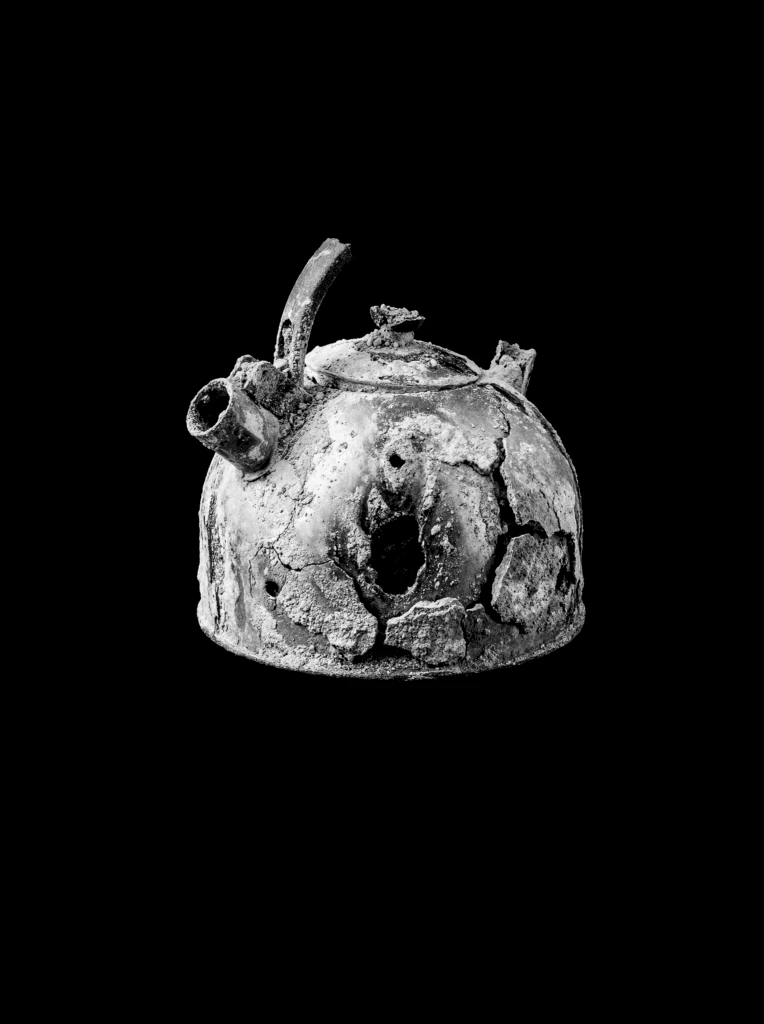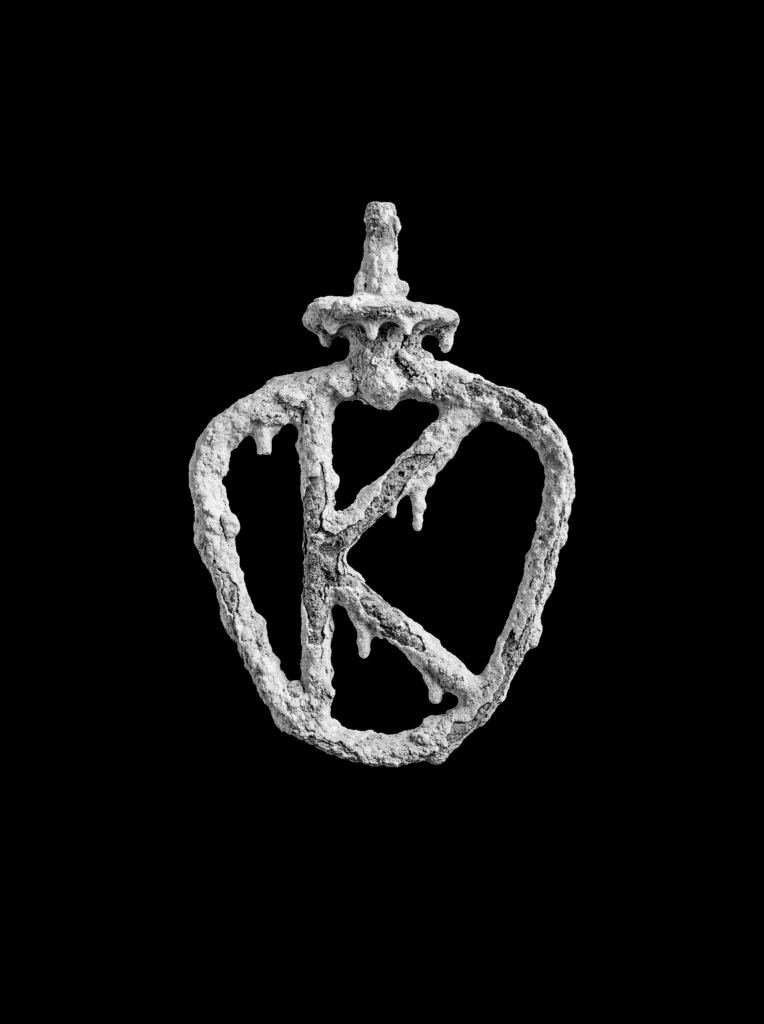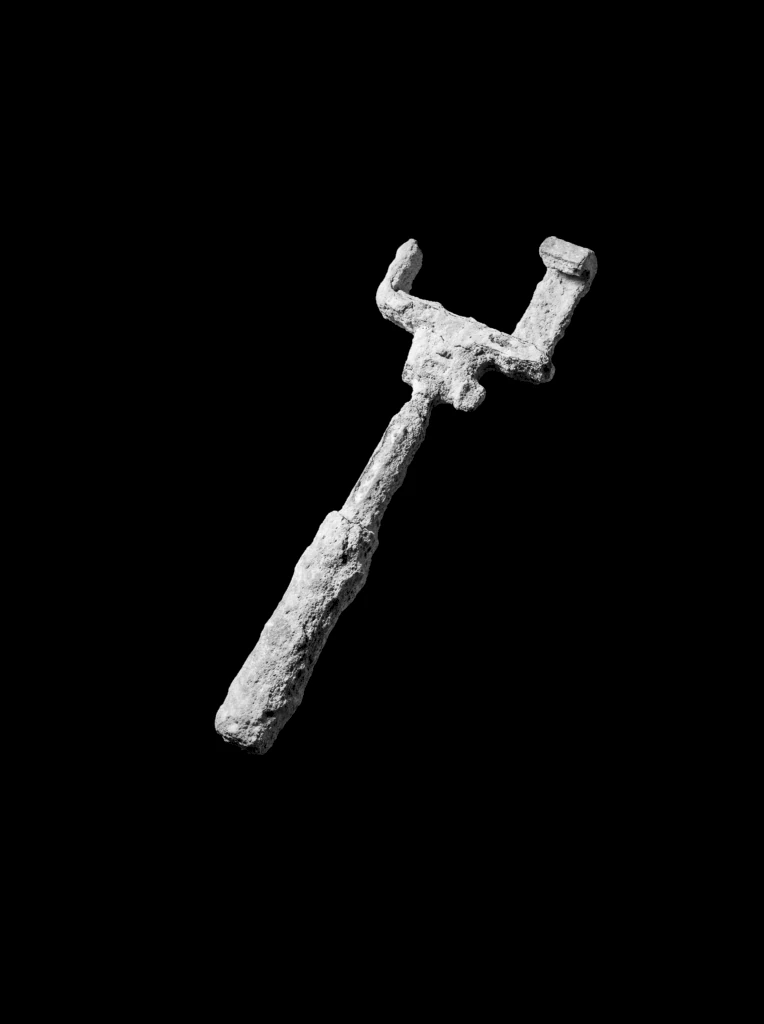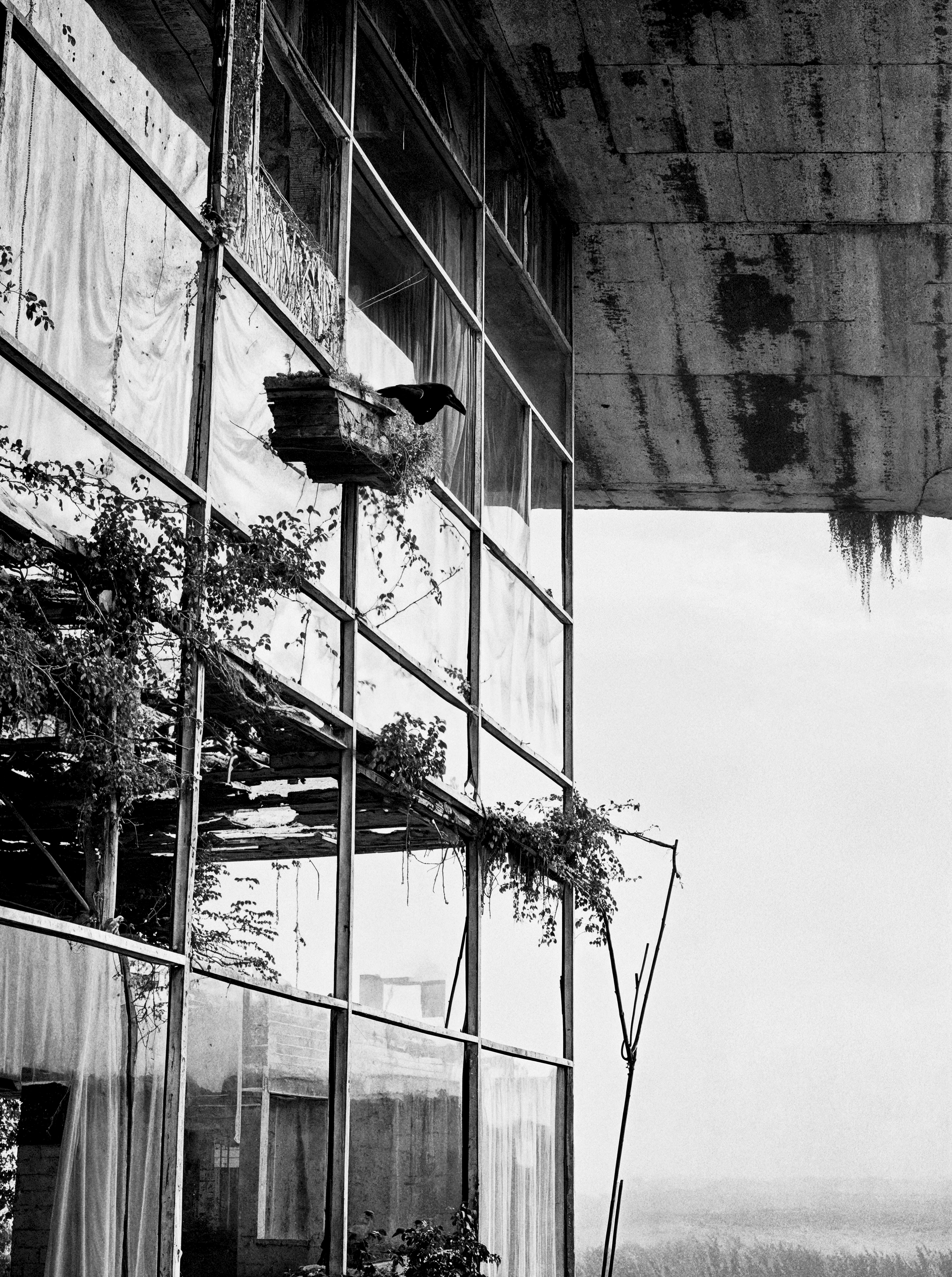
Where the neighbouring tower survives only as a stripped and blank-flanked skeleton, this structure retains, remarkably, walls that one could see through. Set in a regular grid, panels of a transparent material formed the greater part of its outer face, so that the interior lay open to the gaze of anyone without, and the world without to anyone within.
That a dwelling should be walled in a substance affording neither concealment nor defence is among the more perplexing features of the site, and has invited more than one reading.
Behind the transparent panels, the remnants of fabric hangings survive in places, indicating that the exposure could be veiled at will. The occupants, then, were not simply indifferent to being seen; they could show or conceal their domestic life as they chose. Some have taken this to signify a people at ease under observation, holding little apart from public view; others, noting the hangings, argue instead for a practice of revealing and concealing, in which the transparent wall was drawn open or closed as the occasion demanded. A third view holds only that these people prized light, and a prospect over the land, above the shelter a wall is commonly meant to give.
Whatever the intention, the openness that defined the building has proved the means of its undoing. Plants have taken root along its ledges and birds now nest within its frames, nature having entered through the very transparency that was the structure's principle. A wall built to be seen through was, in the end, a wall that let the world in. The site is offered here beside the tower as its near companion and its opposite: the one reaching upward, the other laid open — two solutions, it may be, to a single question we can no longer read.