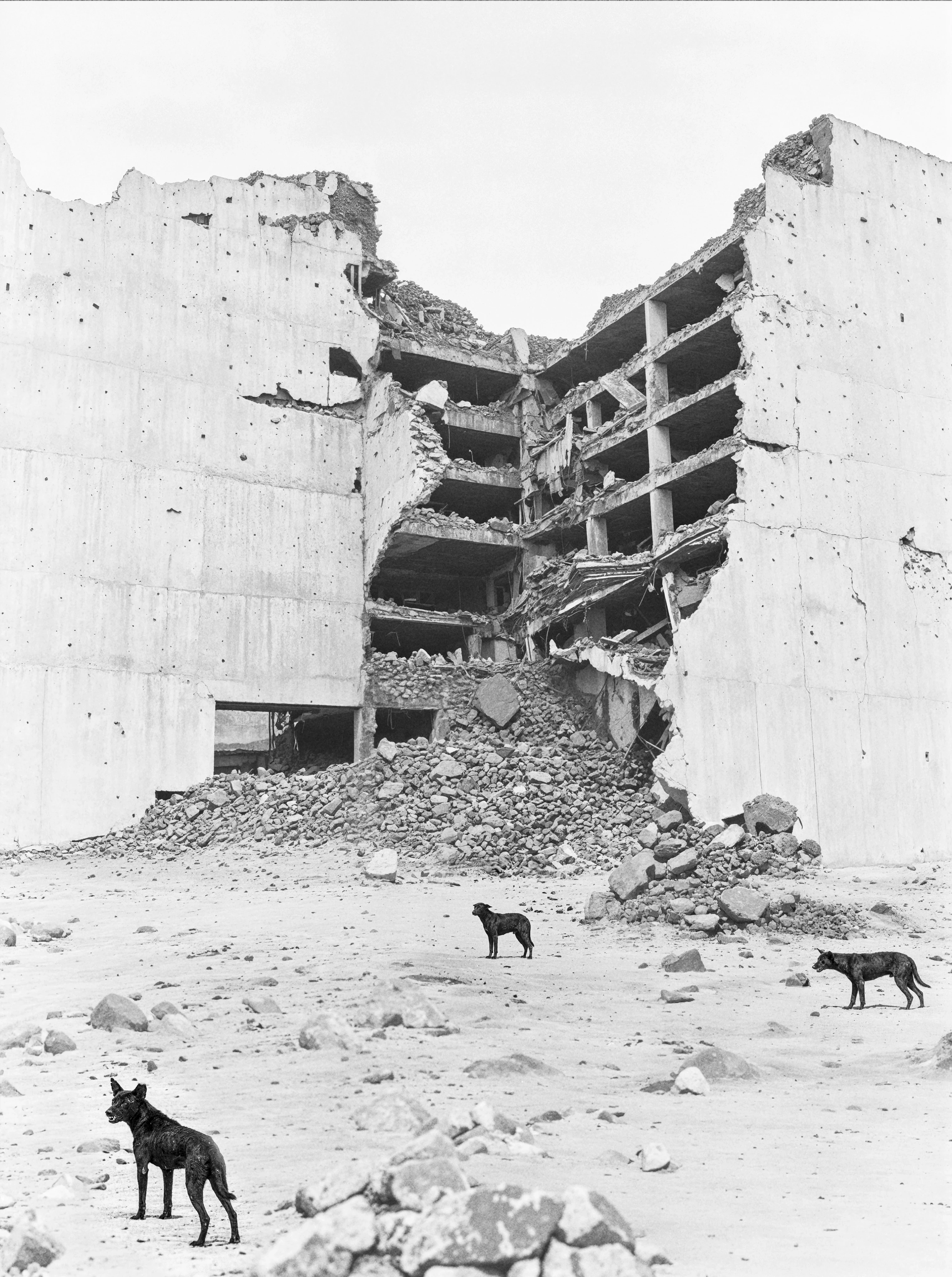
Massive rather than tall, this structure rises only a few levels above the plain, yet its bulk and the severity of its ruin have made it among the more arresting sites in the region. A great wound has been torn through its flank, and the collapse has laid its interior open in section, so that the building may be read almost as a diagram of itself.
What that section reveals is a curious monotony: a stack of near-identical floors, thin and closely spaced, repeated one above another without variation and without any chamber set apart as greater than the rest. Whatever value the structure held did not reside in any single dwelling within it, for the dwellings were interchangeable — each the equal of the one below and the one above. Some have proposed that importance here was reckoned by level alone, that to occupy a cell set higher than one's neighbours was itself a mark of standing; others find in the sheer sameness of the floors evidence of the opposite, a people who housed themselves without distinction of rank. The evidence sustains neither reading decisively.
Why a society should have stacked its dwellings in this manner, rather than spread them across the ample ground around, remains unexplained. The land at its foot is now barren, littered with the debris of the collapse, and the site is attended only by wild animals that pick their way among the fallen stone. That so much labour was spent raising identical cells one upon another, for no advantage the remains disclose, has struck some scholars as scarcely credible. The purpose of the arrangement, like the people who devised it, has not been established.